

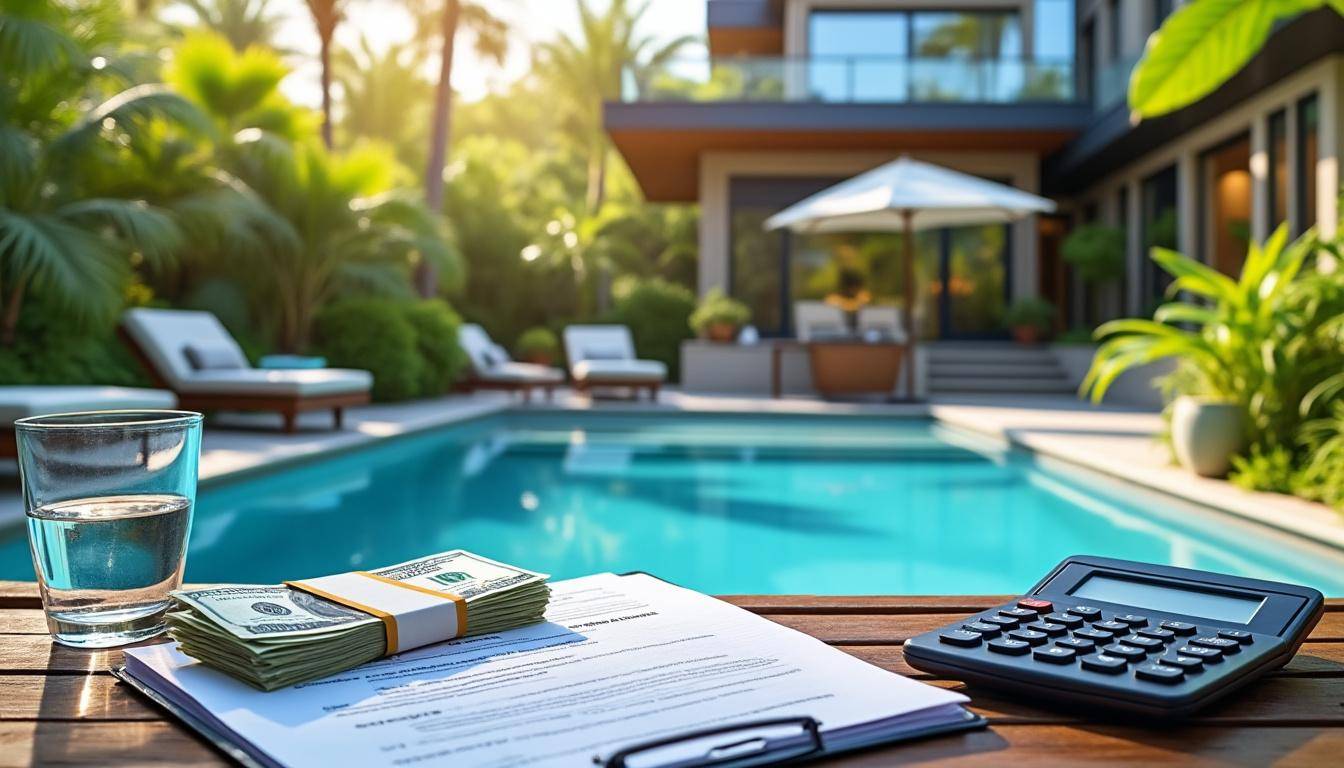
Financing a pool usually comes down to four options: a personal loan, a home equity loan, a HELOC, or cash-out refinancing. The right choice depends on how much you need to borrow, your credit, how much home equity you have, and whether you are comfortable putting your home on the line.
Before you borrow, look at the full cost of ownership, not just the installation quote. A pool can add years of monthly payments along with ongoing maintenance, utilities, and repair costs.
Start With The Full Cost Of The Project
A pool is a major home upgrade, but the build cost is only the starting point. Your total budget should include installation, permits, site work, accessories, and the annual cost to keep the pool running.
Typical Pool Installation Costs
Pool prices vary based on size, materials, yard access, soil conditions, and extras such as heating, lighting, decking, or enclosures. Inground pools are generally the most expensive option, with average costs around $28,000 to $55,000.
Above-ground pools have a much lower entry cost. Basic kits can start near $750, while a more complete setup may average about $2,850. If your project falls into this lower range, paying cash may be more realistic than taking on long-term debt.
Ongoing Pool Ownership Costs
Many borrowers focus on the contractor bid and overlook what comes next. A pool can add regular costs for cleaning, chemicals, water treatment, electricity, heating, and replacement parts. If you are financing the installation, those recurring expenses need to fit comfortably on top of your loan payment.
A reasonable annual maintenance budget is about $1,200 to $3,200. Your actual cost may be higher if you use a professional service, heat the pool often, or add features that need regular upkeep.
| Ongoing Expense | Estimated Annual Cost |
|---|---|
| Cleaning Equipment & Supplies | $300 – $600 |
| Professional Cleaning Service | $500 – $1,200 |
| Water & Chemical Treatments | $300 – $600 |
| Heating & Electricity | $400 – $800 |
| Pool Covers & Lighting | $200 – $400 |
Best Ways To Finance A Pool
Most pool financing falls into one of four categories. Each option has a different trade-off between cost, speed, risk, and repayment flexibility.
Home Equity Loan
A home equity loan gives you a lump sum with fixed payments over a set term, often 10 to 15 years. This can work well if you know your project budget upfront and want predictable monthly payments.
As of early 2026, home equity loan rates can fall roughly in the 4% to 10% range, though pricing varies by lender, credit profile, loan-to-value ratio, and market conditions. The main advantage is a lower rate than many unsecured loans. The main downside is that your home secures the debt, so missed payments can put your property at risk.
HELOC
A HELOC, or home equity line of credit, works more like a revolving credit line than a traditional installment loan. It can be useful if your contractor bills in stages or if your total cost may change during the project.
As of early 2026, HELOC rates may run around 5% to 12% and are often variable. That means your payment can rise if rates move up. A HELOC may offer flexibility, but the variable rate and the fact that your home is collateral make it riskier than a fixed-rate loan for some households.
Cash-Out Refinance
A cash-out refinance replaces your current mortgage with a larger one and gives you the difference in cash. This can spread pool costs over a longer period, typically 15 to 30 years.
As of early 2026, cash-out refinance rates may fall in the 4% to 9% range, but your actual offer depends heavily on mortgage market conditions and your borrower profile. This option may fit homeowners who can improve or maintain a favorable mortgage rate while accessing cash. It tends to be a poor fit if refinancing would raise the rate on your existing mortgage or add significant closing costs for a discretionary project.
Personal Loan
A personal loan is often the simplest way to finance a pool if you do not want to borrow against your home or you do not have enough equity. Personal loans usually come with fixed monthly payments and terms of about 2 to 7 years.
As of early 2026, personal loan APRs can range from about 6% to 36%. Borrowers with strong credit and steady income tend to qualify for the best rates. Borrowers with fair or poor credit may face much higher borrowing costs, which can make a pool far more expensive than expected.
Some lenders offer loans up to $100,000, which may be enough for a large inground project. The biggest advantage is speed and simplicity. The biggest drawback is cost, especially compared with secured borrowing.
| Financing Option | Rate Range As Of Early 2026 | Typical Repayment Term | Uses Your Home As Collateral | Best For |
|---|---|---|---|---|
| Home Equity Loan | 4% – 10% | 10 – 15 years | Yes | Borrowers who want a lump sum and fixed payments |
| HELOC | Variable 5% – 12% | Revolving credit | Yes | Projects with staged or uncertain costs |
| Cash-Out Refinance | 4% – 9% | Typically 15 – 30 years | Yes | Homeowners refinancing their mortgage anyway |
| Personal Loan | 6% – 36% | 2 – 7 years | No | Borrowers who want fast funding without home collateral |
Personal Loan Lenders Worth Comparing
If you are leaning toward a personal loan, compare more than the advertised APR. Look at fees, term length, loan size, funding speed, and whether the lender accepts joint applications or co-borrowers. Terms can change, so confirm current details before you apply.
SoFi
SoFi may be a good fit if you need a larger loan amount. Personal loans can go up to $100,000, with fixed rates and repayment terms from two to seven years. It may work best for borrowers with solid credit who want a straightforward unsecured loan for a larger backyard project.
Before applying, check whether origination fees, eligibility rules, and minimum credit expectations have changed. Large unsecured loans usually require strong credit, stable income, and a manageable debt-to-income ratio.
LightStream
LightStream is often considered by borrowers with strong credit who are looking for competitive starting rates. Loan amounts may go up to $100,000, and longer repayment terms can help reduce the monthly payment on a larger pool project.
The trade-off is that approval standards may be stricter than with lenders serving fair-credit borrowers. If you are shopping this option, verify the current starting APR, autopay discount, and maximum term at the time of application.
LendingPoint
LendingPoint may appeal to borrowers with fair credit who want faster access to funds. Loan amounts may go up to $36,500, which could be enough for a smaller installation or a portion of a larger project.
This type of lender can be useful if your credit profile is not strong enough for the lowest-rate offers, but costs may be higher. Review the full APR, any origination fee, and the total repayment amount before you sign.
Upgrade And Universal Credit
Upgrade and Universal Credit may be options for borrowers with lower credit scores who are trying to qualify for pool financing without using home equity. Upgrade may offer loans up to $50,000, and some applicants may benefit from adding a co-borrower where allowed.
These lenders can widen access to financing, but approval alone should not drive the decision. If the APR and fees are high, a discretionary project like a pool may be better delayed until your credit improves or you can make a larger down payment.
How To Choose The Right Pool Financing Option
The best loan is the one that fits both the project and your wider budget. Start with the amount you need, then compare monthly payment, total interest cost, fees, and risk.
- If you have strong home equity and want lower rates, a home equity loan or HELOC may cost less than a personal loan.
- If you want fixed payments and no home collateral, a personal loan may be easier to manage.
- If refinancing would improve your mortgage terms anyway, cash-out refinancing may be worth a closer look.
- If the payment would squeeze your budget, the project may simply be too expensive right now.
Also review your credit score, income stability, and debt-to-income ratio before applying. Lenders use all three to price your loan and decide whether to approve you.
Be careful with deferred-interest financing from retailers, contractors, or pool builders. Those offers can look cheap at first but become costly if you do not pay the balance off in time. In many cases, a plain fixed-rate loan is easier to understand and safer for your budget.
If you are comparing a pool with other home upgrades, our guide to home renovation financing can help you weigh broader borrowing options.
Mistakes To Avoid Before You Apply
- Borrowing based only on the install quote. Add annual upkeep, insurance effects, and repair reserves to your budget.
- Stretching for the maximum approval amount. Just because a lender offers it does not mean it fits your finances.
- Ignoring total loan cost. A lower monthly payment can still mean much more interest over time.
- Using home-secured debt for a project you may regret. A pool is a lifestyle upgrade, not a necessity.
- Financing a pool while carrying expensive debt. If you already have high-interest credit card balances, paying those down may be the stronger move first.
FAQs About Financing A Swimming Pool
- How long does it take to get approved for a pool loan?
Some online personal lenders can issue a decision within 24 hours, while banks and credit unions may take several business days. Approval is not the same as funding, so confirm when the money will actually arrive if your contractor needs a deposit quickly. - What credit score do you need to finance a pool?
Some lenders may approve borrowers starting around 580, but better rates usually go to applicants with stronger scores. In general, a score above 670 improves your odds of qualifying for lower APRs and fewer fees. - Can you include pool costs in your mortgage?
Yes, in some cases pool construction can be rolled into home purchase or construction financing. If you already own the home, a cash-out refinance may serve a similar purpose, but it also changes your mortgage balance, term, and possibly your interest rate. - What interest rates can you expect on pool financing?
As of early 2026, rates can range from about 4% to 36% depending on the loan type and your credit profile. Secured borrowing usually costs less than unsecured borrowing, but it also puts your home at risk if you cannot repay. - Is it smart to finance a pool if you already have debt?
Usually, caution is warranted. A pool is a discretionary expense, so it generally should not come before high-interest debt payoff, emergency savings, or essential housing costs.
This information is for educational purposes only and does not replace advice from a licensed financial professional. Rates, fees, loan terms, and eligibility rules can change, so compare current offers before applying.