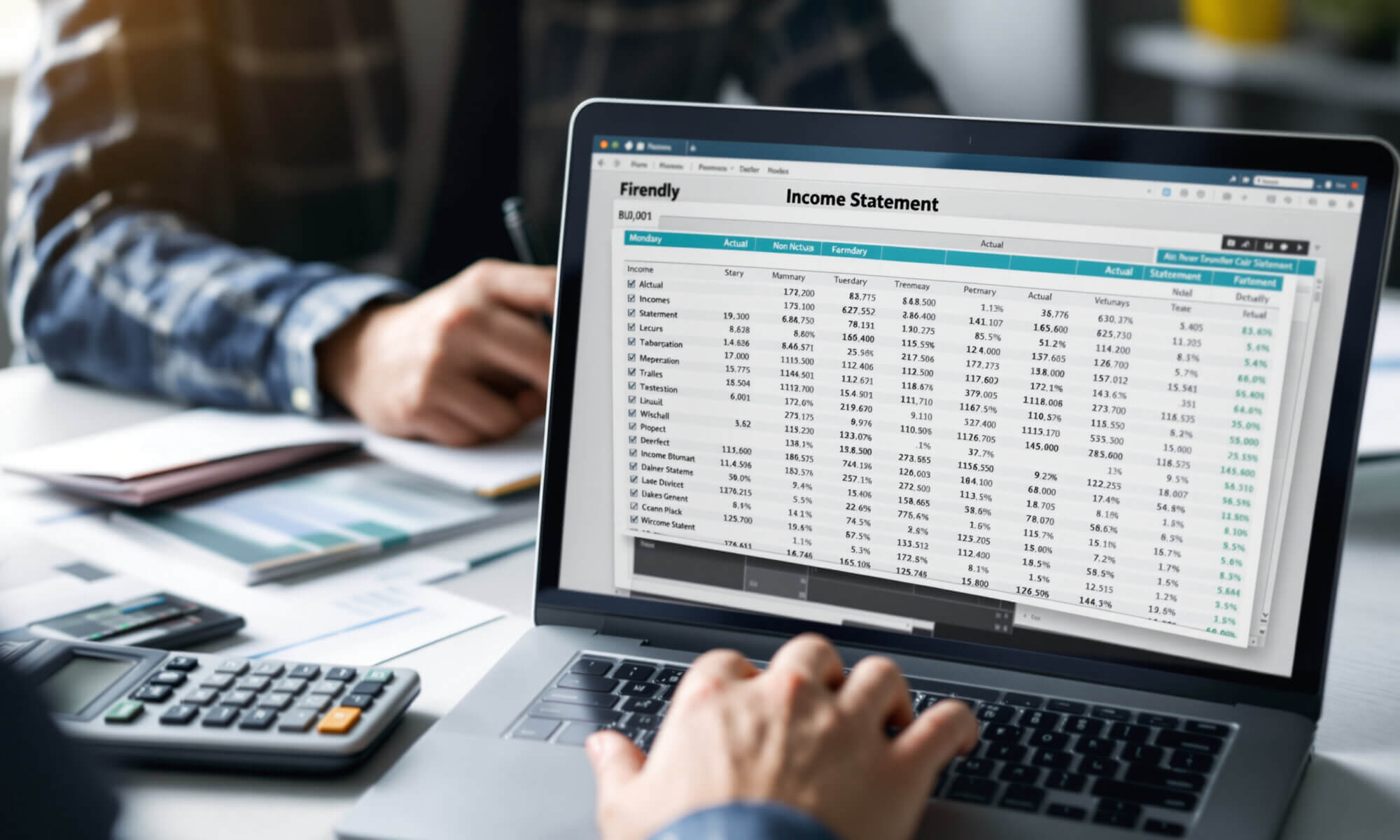

9 Excel Functions Every Beginner Finance Analyst Needs

9 Excel Functions Every Beginner Finance Analyst Needs

The most useful Excel functions for financial analysts help you total data, apply criteria, test assumptions, retrieve records, and evaluate financing or investment cash flows. Start with SUM, SUMIFS, AVERAGEIFS, IF, IFERROR, and XLOOKUP for everyday analysis. Then learn PMT, NPV, and XIRR for loans and cash flow valuation. The examples below show the inputs,

5 AI Workflows for Finance Beginners, With Human Checks

5 AI Workflows for Finance Beginners, With Human Checks

AI for financial analysis beginners is most useful as a drafting and learning aid, not an unquestioned source of answers. You can use it to explain concepts, propose spreadsheet formulas, classify practice data, summarize public reports, and review variance commentary. Each workflow still needs a human check because an AI system can misread context, omit

7 Accounting Practice Exercises for Finance Beginners

7 Accounting Practice Exercises for Finance Beginners

These accounting practice exercises for beginners show how seven common transactions affect journal entries and the accounting equation. You’ll work through owner funding, equipment, credit sales, collections, prepayments, depreciation, and accrued costs. Each hypothetical exercise includes a question, a worked answer, and a balance check so you can see why total assets must always equal

How to Build a 13-Week Cash Flow Forecast in Excel

How to Build a 13-Week Cash Flow Forecast in Excel

A 13 week cash flow forecast Excel model tracks expected cash receipts and payments by week. Start with available cash, add forecast receipts, subtract forecast payments, and carry each closing balance into the following week. This direct-method structure helps a business identify potential cash shortages, test collection delays, and decide when management needs to investigate

Budget vs Actual Analysis in Excel: A Worked Example

Budget vs Actual Analysis in Excel: A Worked Example

A budget vs actual analysis in Excel compares planned financial results with recorded results, calculates the differences, and identifies which items need attention. You can build one with columns for budget, actual, absolute variance, percentage variance, and status. The worked example below uses hypothetical monthly revenue, expenses, and profit, with formulas you can copy into

Learn Finance in 30 Days: A Practical Beginner’s Plan

Learn Finance in 30 Days: A Practical Beginner’s Plan

You can learn finance in 30 days well enough to read basic financial statements, perform useful Excel calculations, and analyze a simple business. You won’t achieve professional mastery in a month, but you can build a practical foundation through 45 to 75 minutes of daily study. This plan includes five catch-up days, weekly deliverables, and

9 Financial Modeling Mistakes and How to Catch Them

9 Financial Modeling Mistakes and How to Catch Them

Most financial modeling mistakes come from inconsistent inputs, formulas, or logic rather than difficult mathematics. You can catch many of them by separating assumptions, standardizing units and periods, tracing links, and building explicit checks. The nine errors below show what can go wrong, why it matters, and which diagnostic test or corrected formula can expose

5 Financial Analyst Portfolio Projects for Beginners

5 Financial Analyst Portfolio Projects for Beginners

Strong financial analyst portfolio projects show how you turn raw data into a decision, not simply whether you can format a spreadsheet. Beginners can demonstrate that ability through five practical assignments: financial statement analysis, budget variance analysis, cash forecasting, a credit memo, and project appraisal. Each project below includes suitable data, a repeatable process, expected

CFA vs FMVA vs Investment Foundations: Which Fits You?

CFA vs FMVA vs Investment Foundations: Which Fits You?

The CFA vs FMVA choice depends on the work you want to do. The Chartered Financial Analyst (CFA) Program is the deepest route for investment analysis and portfolio management. The Financial Modeling & Valuation Analyst (FMVA) program emphasizes spreadsheet-based modeling and valuation. The Investment Foundations Certificate provides a shorter introduction to how the investment industry

Finances Book

Finances Book

The right finance books for beginners depend on what you want to learn. Start with The Psychology of Money for financial behavior, Personal Finance For Dummies for everyday money management, or Financial Intelligence for understanding business numbers. Investment analysis comes later. These seven books cover different needs, with suggested exercises to help you turn reading

Financial Report

Financial Report

To learn how to read financial statements, start with three questions: did the business earn a profit, what does it own and owe, and where did its cash go? Read the income statement, balance sheet, and cash flow statement together, then check the notes. A business can report a profit while struggling to collect payments,

How to become a certified financial planner

How to become a certified financial planner

Launching oneself into the sphere of a credentialed financial architect (CFP) can prove profoundly gratifying for those captivated by the prospect of guiding others towards their pecuniary objectives. As the bedrock of fiscal scheming, investment administration, and asset protection techniques, CFPs are invariably in demand from patrons and companies. In this discourse, we shall traverse

The importance of continuing education in finance

The importance of continuing education in finance

In the ever-evolving world of finance, staying current and competitive is crucial for long-term success. One of the most effective ways to achieve this is by embracing continuing education in finance. This not only expands your knowledge and skills, but also helps you adapt to industry changes, stay ahead of the competition, and advance in