

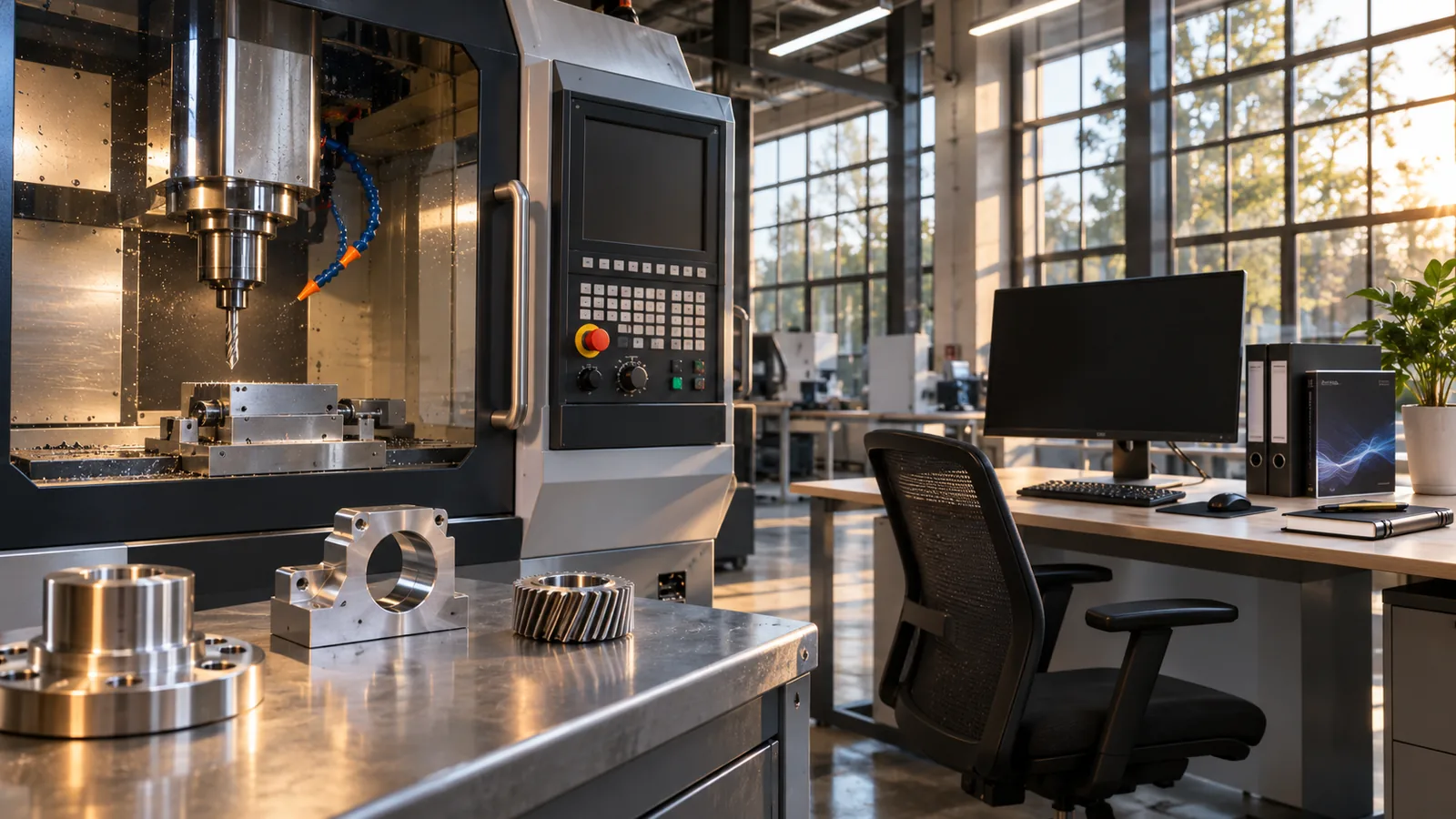
Depreciation allocates the cost of a physical asset over its useful life, while amortization generally allocates the cost of a finite-lived intangible asset. Both reduce accounting profit without requiring a new cash payment when the expense is recognized, but they apply to different kinds of assets. The distinction helps analysts interpret reported earnings, asset values, and cash flow.
Depreciation vs. Amortization: The Key Difference
Businesses often pay upfront for assets that provide value for several years. Under U.S. generally accepted accounting principles (GAAP), the cost of a qualifying long-lived asset is typically recorded on the balance sheet and recognized as expense over the periods it benefits. The Securities and Exchange Commission’s financial statement guide describes how these charges affect operating expenses and cash flow.
| Feature | Depreciation | Amortization |
|---|---|---|
| Typical asset | Physical property, plant, and equipment | Finite-lived intangible assets |
| Examples | Machinery, vehicles, furniture, buildings | Acquired patents, customer relationships, acquired technology |
| Common method | Straight-line or another systematic method | Straight-line or a method reflecting economic benefit |
| Expense effect | Reduces earnings | Reduces earnings |
| Cash effect when charged | Usually none | Usually none |
Land generally is not depreciated because it does not have a limited useful life. Likewise, an intangible asset with an indefinite useful life is not routinely amortized. Goodwill, the excess value recognized in certain business acquisitions, is generally tested for impairment rather than amortized by public companies under U.S. GAAP. A. O. Smith’s 2025 Form 10-K illustrates these distinctions in its accounting policies.
How to Calculate Depreciation: A Machine Example
The simplest approach is straight-line depreciation, which allocates the same expense in each full year of an asset’s estimated useful life. Residual value, also called salvage value, is the amount expected to be recovered when the asset is retired. The Federal Reserve’s accounting manual explains the formula and the role of estimated useful life.
Annual depreciation = (Asset cost − Estimated residual value) ÷ Useful life in years.
Assume a hypothetical manufacturer purchases a machine for $120,000, expects to recover $20,000 after five years, and places it in service at the start of Year 1. The depreciable amount is $120,000 − $20,000 = $100,000. Annual straight-line depreciation is $100,000 ÷ 5 = $20,000 per year.
| End of year | Annual expense | Accumulated depreciation | Net book value |
|---|---|---|---|
| Purchase date | $0 | $0 | $120,000 |
| 1 | $20,000 | $20,000 | $100,000 |
| 2 | $20,000 | $40,000 | $80,000 |
| 3 | $20,000 | $60,000 | $60,000 |
| 4 | $20,000 | $80,000 | $40,000 |
| 5 | $20,000 | $100,000 | $20,000 |
Net book value, or carrying amount, equals asset cost less accumulated depreciation and any relevant impairment adjustments. Here the machine finishes Year 5 at the estimated $20,000 residual value. Book value is an accounting measure, not a current resale quotation.
Depreciation journal entry
For each full year, the manufacturer records a $20,000 debit to depreciation expense and a $20,000 credit to accumulated depreciation, a contra-asset account that offsets the machine’s gross cost. The entry reduces operating profit and the asset’s net carrying amount. It does not represent a second cash purchase.
How to Calculate Amortization: A Patent Example
Amortization applies to recognized intangible assets that have finite useful lives. An acquired patent, customer relationship, or technology right can qualify when its cost is capitalized. Amortization usually follows the expected consumption of economic benefits; straight-line is appropriate when a more specific pattern cannot be determined reliably.
Annual straight-line amortization = (Capitalized intangible cost − Expected residual value) ÷ Useful life in years.
Assume the same hypothetical manufacturer acquires patent rights for $60,000, expects to use them for six years, and estimates no residual value. Annual amortization is ($60,000 − $0) ÷ 6 = $10,000. At the end of Year 2, accumulated amortization is $20,000 and the intangible’s net book value is $60,000 − $20,000 = $40,000.
The annual journal entry debits amortization expense for $10,000 and credits accumulated amortization, or directly reduces the intangible asset, for the same amount. If the asset becomes impaired or its expected useful life changes, its future accounting may change. The original purchase price is not automatically deducted in full from profit on day one.
Where the Expenses Appear in Financial Statements
Income statement
Depreciation and amortization reduce reported earnings. Depending on what an asset supports, the charge can appear in cost of goods sold, research-related costs in qualifying circumstances, or operating expenses. A company does not necessarily display one separate line labeled depreciation and amortization. Analysts often need the financial statement notes to locate the full amount.
Balance sheet
Property, plant, and equipment are generally shown net of accumulated depreciation; amortizable intangibles are shown net of accumulated amortization. The assets remain recorded until disposed of or otherwise derecognized. For a practical approach to these accounts, see our guide to analyzing balance sheet assets.
Cash flow statement
Under the indirect method of presenting operating cash flow, depreciation and amortization are added back to net income because those expenses did not consume cash in the current period. The original cash purchase of equipment or an intangible asset generally appears as an investing cash outflow when acquired separately. Adding back an expense does not reverse the original investment. The SEC’s explanation of the cash flow statement makes this distinction clear. Our free cash flow calculation guide explains how cash capital expenditures affect the amount left after operating cash flow.
Worked Example: D&A, EBITDA, and Cash Flow
Consider the same hypothetical business in Year 1. Assume the machine and patent were purchased and placed in service on January 1, both paid for in cash, and the company has no other investing or financing cash flows. It reports earnings before interest, taxes, depreciation, and amortization (EBITDA) of $200,000. EBITDA is a non-GAAP earnings measure that excludes those four costs.
| Hypothetical Year 1 item | Calculation | Amount |
|---|---|---|
| EBITDA | Assumed | $200,000 |
| Machine depreciation | ($120,000 − $20,000) ÷ 5 | ($20,000) |
| Patent amortization | $60,000 ÷ 6 | ($10,000) |
| Operating income (EBIT) | $200,000 − $30,000 | $170,000 |
| Interest expense | Assumed | ($20,000) |
| Income tax expense | 20% × $150,000 | ($30,000) |
| Net income | $170,000 − $20,000 − $30,000 | $120,000 |
Assume income taxes and interest are paid in cash and there are no working-capital movements or other noncash items. Operating cash flow under the indirect method is $120,000 net income + $20,000 depreciation + $10,000 amortization = $150,000. The $120,000 machine purchase and $60,000 patent purchase together create $180,000 in investing cash outflows. Overall cash flow from these activities is $150,000 − $180,000 = −$30,000.
This is why EBITDA is not cash flow: the company has an accounting expense of $30,000 from long-lived assets but spends $180,000 buying them. Analysts should compare capital spending with operating cash generation, rather than treating the $30,000 add-back as newly earned cash. For more on this metric, read how EBITDA valuation multiples compare with P/E.
Real Company Example: A. O. Smith’s 2025 Annual Report
A. O. Smith Corporation, a U.S.-listed manufacturer, separates depreciable property and equipment from amortizable intangible assets in its Form 10-K for the fiscal year ended December 31, 2025. The following figures are in millions of U.S. dollars, from Notes 8 and 9 of the company’s 2025 SEC filing, filed February 10, 2026.
| 2025 balance sheet item | Gross amount | Accumulated charge | Net value |
|---|---|---|---|
| Property, plant, and equipment | $1,564.4M | ($929.3M) | $635.1M |
| Amortizable intangible assets | $299.1M | ($205.8M) | $93.3M |
| Indefinite-lived trade names | $269.0M | $0 | $269.0M |
The reconciliation is direct: $1,564.4M − $929.3M = $635.1M for property and equipment, and $299.1M − $205.8M = $93.3M for amortizable intangibles. A. O. Smith also reported $14.8 million of amortization expense for other intangible assets in 2025. Its indefinite-lived trade names are not subject to scheduled amortization; they are evaluated for impairment. Accumulated balances are lifetime-to-date figures, not the annual expense.
This example shows why the notes in a Form 10-K annual report matter: they distinguish the gross acquisition costs, accumulated expenses, carrying values, and accounting assumptions behind a company’s assets.
Common Mistakes When Comparing Depreciation and Amortization
- Confusing expense with cash spending. The annual charge normally occurs after the asset’s initial purchase. Cash capital expenditures and accounting expense can differ sharply.
- Assuming every intangible asset is amortized. Indefinite-lived assets and goodwill for public companies are normally tested for impairment rather than amortized.
- Assuming one method fits every asset. Useful lives, residual values, and expense patterns require estimates; some tangible assets use accelerated depreciation methods.
- Comparing tax deductions with financial reporting expenses. U.S. tax rules can use different recovery periods and methods, including the modified accelerated cost recovery system (MACRS). See IRS Publication 946.
- Treating a low book value as proof of low economic value. An older machine may remain productive, while a recently acquired intangible may fail to generate expected benefits.
Key Takeaways
Depreciation usually applies to tangible assets; amortization generally applies to finite-lived intangible assets. Both allocate capitalized costs over time, reduce earnings, and are normally added back when operating cash flow is calculated using the indirect method. To evaluate a business, inspect the useful-life assumptions, distinguish current-year expense from accumulated amounts, and compare the charges with the cash actually invested in long-lived assets.
For educational purposes only; not investment, tax or career advice.