

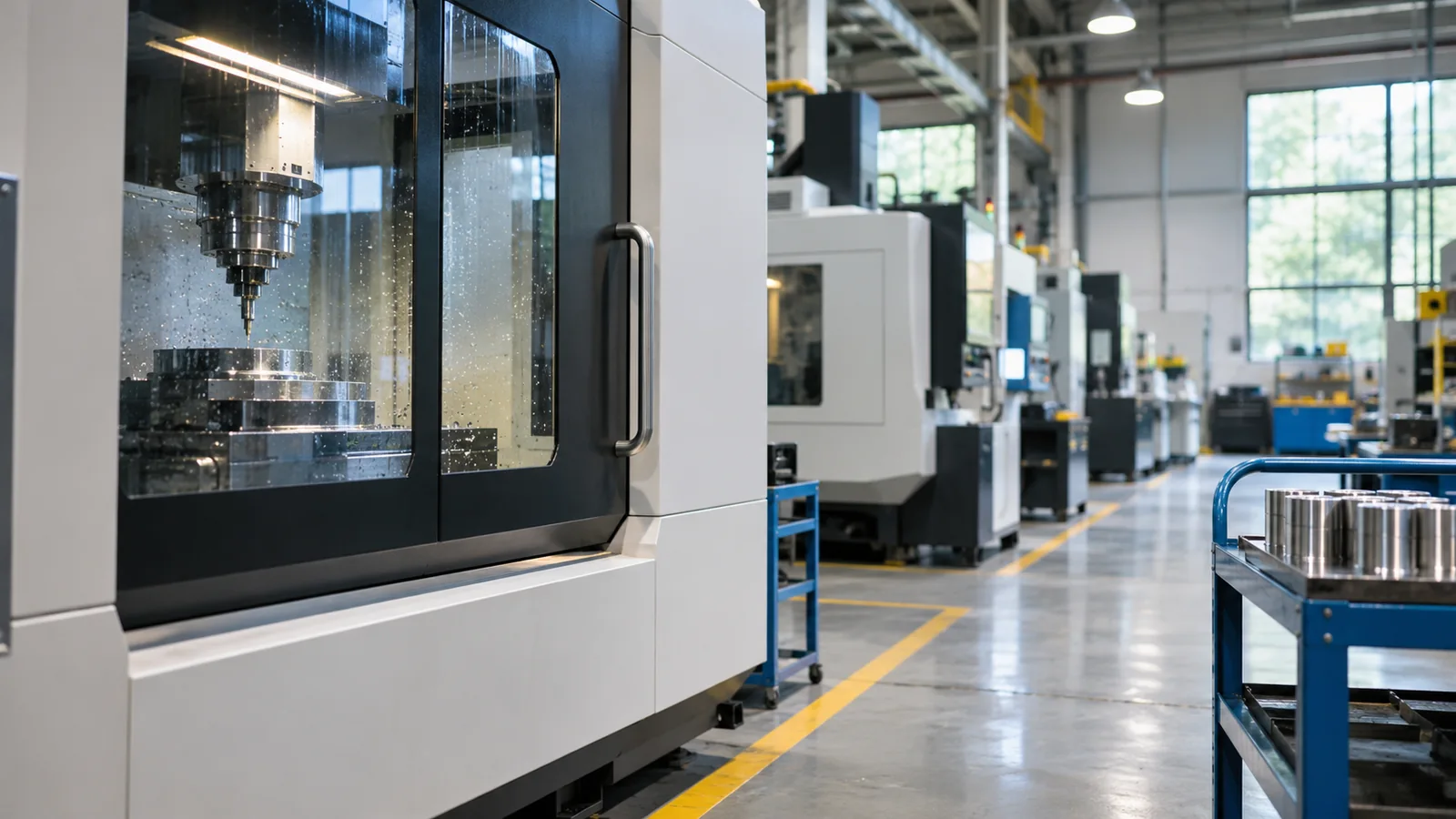
Capital expenditures (CapEx) are investments in assets that a company expects to use over multiple years, while operating expenses (OpEx) are costs recognized from running the business. The difference matters because CapEx and OpEx affect reported profits, asset values, cash flow, and financial forecasts in different ways.
A company can report strong earnings while spending heavily on infrastructure, equipment, or technology. Understanding how these investments are recorded helps investors evaluate profitability, cash generation, and the sustainability of future growth.
What Is the Difference Between CapEx and OpEx?
Capital expenditures (CapEx) are spending on assets that provide benefits over multiple accounting periods. Examples include factories, manufacturing equipment, servers, and major facility improvements. Qualifying expenditures are capitalized, meaning the company initially records them as assets on its balance sheet.
Operating expenses (OpEx) are expenses recognized in the course of business operations. Examples include administrative salaries, advertising, utilities, routine maintenance, and many research and development activities. These expenses generally reduce operating profit in the period in which the related goods or services are consumed.
The fundamental difference is the timing of expense recognition. CapEx generally becomes an expense gradually through depreciation or amortization, while OpEx is recognized more immediately.
| Feature | CapEx | OpEx |
|---|---|---|
| Main purpose | Acquire or improve long-lived assets | Support business operations |
| Typical examples | Machinery, buildings, servers | Salaries, utilities, advertising |
| Initial accounting | Capitalized on balance sheet | Recognized as an expense |
| Income statement | Depreciation or amortization over time | Expense recognized in the relevant period |
| Cash flow statement | Usually investing activities | Usually operating activities |
| Impact on EBITDA | Purchase generally excluded | Usually reduces EBITDA |
The distinction is governed by accounting rules, not simply by the size of a payment. The SEC’s financial statement guide explains how operating expenses, depreciation, and asset purchases appear in different financial statements.
Which Costs Qualify as Capital Expenditures?
Under US generally accepted accounting principles (GAAP), the relevant question is whether an expenditure creates or improves an asset that meets the requirements for capitalization. A company may capitalize the purchase of production machinery or an improvement that extends a building’s useful life. Routine cleaning, repairs, and maintenance generally remain period expenses.
Asset useful life, the company’s capitalization policy, materiality, and the applicable accounting guidance all matter. Buying an inexpensive tool does not automatically require capitalization. Conversely, an expensive marketing campaign generally remains an expense rather than becoming a capital asset because management expects future sales.
Software, research, and leases require closer analysis
Technology costs are particularly easy to misclassify. Some qualifying internal-use software development costs can be capitalized; other development, research, support, and subscription costs are expensed. The FASB’s guidance on internal-use software illustrates why the nature of the activity matters. Its 2025 update has a future effective date, so analysts should check which guidance a company applied for the reporting period.
Research and development (R&D) is generally expensed as incurred under US GAAP, subject to specific exceptions. Leases also complicate a simple buy-versus-rent comparison: a business can recognize a right-of-use asset and lease liability without reporting the entire arrangement as ordinary cash CapEx. Do not infer cash-flow classification from the existence of a balance-sheet asset alone.
How CapEx and OpEx Flow Through the Three Financial Statements
Income statement: expenses arrive at different times
An operating expense reduces earnings when recognized. An eligible equipment purchase does not normally reduce earnings by its full price immediately. Instead, depreciation allocates its depreciable cost across the years the asset is used. Depreciation is a noncash accounting expense in those later periods, although the purchase itself requires cash or financing.
Depreciation may appear within cost of revenue or a separate operating expense line. This is why the label “OpEx” can be ambiguous: financial presentations sometimes use it narrowly for selling, general, and administrative expenses plus R&D, while a broader operating-cost analysis also considers production costs. Read the company’s income statement definitions before comparing ratios.
Balance sheet: capitalized assets decline over time
When equipment is acquired for cash, cash decreases and property, plant, and equipment increases by the amount capitalized. Subsequent depreciation reduces the asset’s net carrying value through accumulated depreciation. Ordinary expenses do not create the same long-lived asset balance, although prepayments and accruals can temporarily affect the balance sheet.
For a framework for evaluating property, equipment, debt, and asset quality, read how to analyze a balance sheet before buying stock.
Cash flow statement: the location of the payment changes
Cash payments for property and equipment generally appear under investing activities. Ordinary operating payments generally affect cash from operating activities. When operating cash flow is calculated using the indirect method, depreciation is added back to net income because it is not another cash payment. The SEC’s cash flow statement explainer shows these classifications side by side.
This distinction is especially important when calculating free cash flow (FCF), a commonly used non-GAAP analytical measure:
Free cash flow (USD) = Operating cash flow (USD) − Cash capital expenditures (USD)
FCF requires both sides of the spending picture. It is not the same as operating cash flow and can differ across company-defined reconciliations.
Worked Example: A $120,000 Purchase Versus a $120,000 Expense
Consider a hypothetical US business with annual revenue of $1,000,000 and existing cash operating costs of $600,000. It faces two alternative ways to obtain productive capacity: buy a machine for $120,000 at the start of the year, or pay $120,000 for an operating service consumed during the year. The alternatives are used only to illustrate accounting treatment, not to claim they deliver identical business results.
Assume the machine has a five-year useful life, no residual value, and straight-line depreciation; it is available for the full year. Ignore taxes, interest, working capital changes, other investing and financing activities, and all additional expenses. All figures are hypothetical US dollars for one year.
Annual machine depreciation = ($120,000 − $0) ÷ 5 years = $24,000 per year.
| Year-one measure | Buy machine: CapEx | Buy service: OpEx |
|---|---|---|
| Revenue | $1,000,000 | $1,000,000 |
| Existing cash operating costs | ($600,000) | ($600,000) |
| Additional service expense | $0 | ($120,000) |
| EBITDA | $400,000 | $280,000 |
| Equipment depreciation | ($24,000) | $0 |
| Operating profit (EBIT) | $376,000 | $280,000 |
| Operating cash flow | $400,000 | $280,000 |
| Investing cash paid for CapEx | ($120,000) | $0 |
| Free cash flow | $280,000 | $280,000 |
| New equipment net book value, year-end | $96,000 | $0 |
CapEx scenario: EBITDA = $1,000,000 − $600,000 = $400,000. EBIT = $400,000 − $24,000 = $376,000. FCF = $400,000 − $120,000 = $280,000. The machine’s closing net book value is $120,000 − $24,000 = $96,000.
OpEx scenario: EBITDA and EBIT each equal $1,000,000 − $600,000 − $120,000 = $280,000. With no additional capital spending, FCF = $280,000 − $0 = $280,000.
The machine purchase produces $120,000 more EBITDA and $96,000 more operating profit in year one, but neither alternative produces more year-one FCF under the stated assumptions. Both spend $120,000 in cash. Future cash flow will differ if the service must be renewed or the machine needs maintenance or replacement.
Why the Distinction Matters for Investors and Financial Models
Profitability comparisons: Asset-heavy businesses can show higher EBITDA because purchases of equipment are excluded from that metric. EBITDA means earnings before interest, taxes, depreciation, and amortization. It does not deduct the cash paid to replace machinery or servers. Comparing companies by EBITDA alone can overstate how much cash an asset-intensive business can distribute.
Free cash flow: Growth in reported profit does not guarantee growth in money left after investment. A company building factories or data centers can have strong operating cash flow but weak or negative FCF. See how to calculate free cash flow for the standard reconciliation.
Forecasting: A model should separate operating expenses, depreciation, new CapEx, and asset replacement needs. Capital expenditures typically affect the cash flow forecast immediately, then generate future depreciation expense. OpEx assumptions affect projected operating margins more directly. A credible forecast should also consider whether new assets produce enough revenue or cost savings to justify the cash investment.
Business quality: Maintenance CapEx helps sustain existing operations, while growth CapEx aims to expand capacity. Companies do not always disclose a clean split. Analysts can compare spending, useful lives, depreciation, capacity, and management commentary to estimate whether investment mainly preserves the business or creates additional earning power. For an industry-specific application, see why AI capital spending can reduce free cash flow.
Where to Find CapEx and OpEx in a 10-K
Start with the income statement for cost of sales, selling and administrative expenses, R&D, and depreciation disclosures. Then inspect the cash flow statement’s investing section for purchases of property, plant, and equipment. Finally, read the notes for useful lives, capitalization policies, intangible assets, leases, and purchase commitments.
Do not assume the cash spent on equipment equals the change in the balance-sheet asset balance. Depreciation, disposals, acquisitions, foreign-exchange effects, noncash additions, and impairments can create a difference. Our guide to reading a Form 10-K like an analyst explains how to connect the statements and notes.
Common Mistakes to Avoid
- Assuming that CapEx is not a cost: The cash leaves the business even when the purchase is capitalized.
- Calling every large payment CapEx: The accounting treatment depends on what was purchased and the applicable standard.
- Using EBITDA as cash flow: EBITDA omits capital spending and changes in working capital.
- Subtracting depreciation twice: FCF based on operating cash flow already reflects the cash flow statement’s reconciliation of noncash depreciation.
- Ignoring replacement spending: Assets depreciate, wear out, or become obsolete; a realistic model includes reinvestment.
- Confusing commitments with cash payments: A lease or equipment commitment may be recognized before cash is paid, changing the reconciliation.
Key Takeaways
CapEx and OpEx describe different accounting treatments, not different levels of economic importance. Capitalized spending creates an asset and generally reaches the income statement over time, while ordinary operating expenses reduce earnings as they are recognized. Both can require immediate cash.
For investment analysis, review operating profit, cash from operations, cash CapEx, and free cash flow together. For financial modeling, forecast investment spending and depreciation separately, and assess whether long-term assets will earn an adequate return rather than treating capitalization as a source of value.
For educational purposes only; not investment, tax or career advice.